> For the complete documentation index, see [llms.txt](https://docs.apyx.fi/llms.txt). Markdown versions of documentation pages are available by appending `.md` to page URLs; this page is available as [Markdown](https://docs.apyx.fi/apyx-overview/the-digital-credit-thesis.md).
# The Digital Credit Thesis
The Dollar Reinvented by DAT Collateral
### The Trillion Dollar Yield Crisis
As of February 2026, the stablecoin total market cap has ballooned to nearly $310 billion, nearly 85% of which is comprised of USDT and USDC. Simply holding stablecoins doesn't generate any default yield, since returns from their reserves aren't automatically passed to token holders. To generate a yield, users must take on extra risks via a lending platform or liquidity provisioning. Otherwise, dollars sit and generate zero return. With more than $300 billion in capital stuck in zero/low yielding stablecoins, a disconnect grows between the capital's scale and the rails for delivering yields. This is essentially the "eroding money problem," where assets lose value relative to inflation.
The burden of a non-yielding stablecoin becomes apparent when accounting for inflation, which has average 3% annually for the past decade. Passively holding most stablecoins means a loss of purchasing power over time. Normally, market participants park capital into cash-like products, such as T-bills or money market funds, to minimize the burden of inflation. Though better than the near 0% rate offered in a traditional savings account, money market products still deliver underwhelming returns that fail to outpace inflation.\
\
The bottom line is simple: idle capital may sit safe but doesn't inherently protect against loss of value. Onchain, the same dynamic exists - passively holding stablecoins without action results in zero yield and a loss of value.
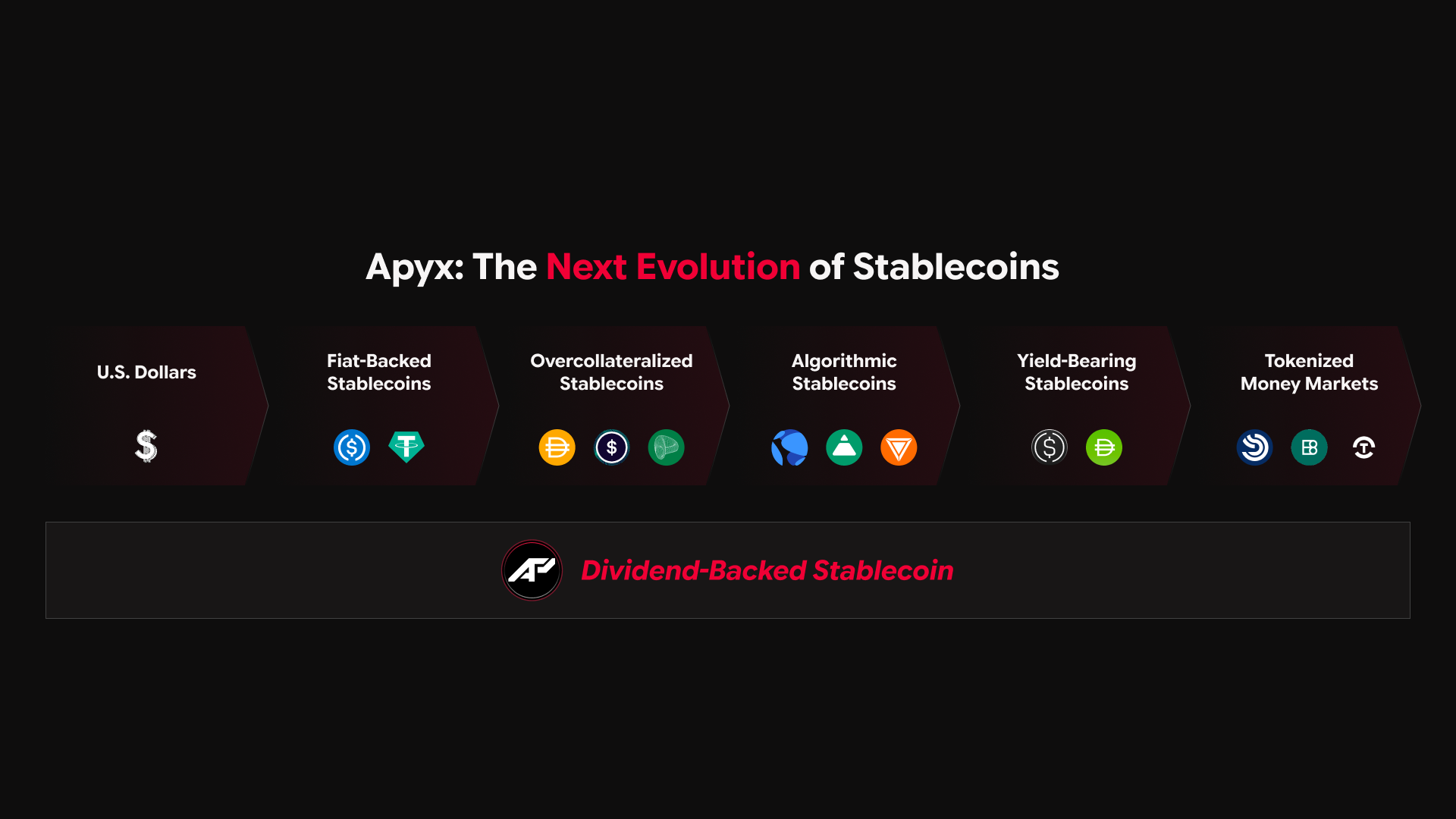
In the search for yield, the cryptoasset industry has seen the birth of yield-bearing stablecoins (YBS). These stablecoins have a native yield embedded that are fueled, typically, by opaque trading strategies. In other words, YBS rely structurally on derivative funding, hedge operations, and trading costs, often intertwined with centralized exchanges for liquidity and margin management. This, amongst other things, creates compounding problems with scale. As capital floods in, similar carry and basis opportunities get competed away quickly. Inevitably, as size grows, yield diminishes. So while this approach proves demand for yield-bearing dollars, it's structurally disadvantaged for scaling to a trillion-dollar baseline yield rail. Sourcing yield this way also opening the door to high operational costs, market & derivative risks, and other structural risks that can result in holders actually being under-compensated relative to the risk assumed.
### Unlocking Value Through DATs
The key to bridging this gap lies in DATs (Digital Asset Treasuries), which are publicly listed companies that hold digital assets on their balance sheet, such as bitcoin (BTC), ether (ETH), or solana (SOL). They place asset holdings at the core of their financial strategy, leveraging capital markets to grow their holdings.
Historically, this model has worked because these companies, namely Strategy (MSTR), traded at a premium to its net asset value (NAV). When the premium holds, the company can raise funds to buy more assets, resulting in more digital asset per share, which becomes a flywheel for additional issuance, purchases, and growth. Conversely, if the premium to NAV weakens, new issuance is seen as dilutive, thereby preventing further digital asset accumulation.
This is why preferred shares have gained popularity in a DAT’s capital structure. The most common structure for these preferreds is variable-rate perpetual stock. While preferred equity is legally equity, it behaves economically like debt: it pays a stated dividend, sits senior to common stock in the capital stack, and provides investors with a predictable income stream. Unlike traditional debt, however, it has no maturity date and no principal repayment obligation. The DAT never has to repay the original capital, provided it continues to service the dividend. In many cases, the dividend rate adjusts periodically to help the preferred trade near its par value, typically $100. The use of this hybrid structure in the context of DAT accumulation results in what is known as “Digital Credit.”
Strategy positions STRC as "Short Duration High Yield Credit" or "Bitcoin-backed Money Market," paying dividends monthly in cash and adjusting rates each month to keep the price trading near its $100 par value. As of February 2026, STRC's indicated dividend rate is 11.25%. STRC was just the first of this type of instrument, though, and many DATs will issue variable rate perpetual preferred shares.
### The Apyx Vision: Pioneering Digital Credit
Digital Credit is powerful, but in its current form it remains largely confined to traditional markets. DAT preferred equity generates recurring cash dividends that are structured, transparent, and scalable. Yet those cash flows sit offchain in brokerage accounts, rather than flowing into the onchain economy.
Apyx bridges that divide.
Rather than depending on crowded basis trades or reflexive funding markets, Apyx anchors itself to the dividend layer created by DAT preferred equity. The protocol acquires preferred shares, aggregates their recurring cash flows, and converts those offchain dividends into programmable onchain yield.
The architecture is simple but game-changing. Digital assets reside on public balance sheets. Preferred equity finances their accumulation. Dividends are paid in cash. Apyx transforms those cash flows into a native onchain savings rail.
This is not a short-term trade. It is a structural connection between public capital markets and DeFi. As preferred issuance expands, dividend streams grow. As those dividend streams grow, the depth and resilience of onchain yield strengthen. More compelling dollar savings reinforce demand for the preferred layer that supports it.
That reinforcing loop is the "Digital Credit Flywheel."
For the first time, recurring cash flows generated in public markets can directly power onchain savings. Stablecoins reaching a trillion-dollar market is inevitable. The more important question is where the yield that underpins that growth will originate, and who will capture it. Apyx answers that question.
In the end, it all connects into one picture: more preferred issuances, larger dividend cash flows, greater onchain yield delivery, and increased stablecoin demand interlocking to form a liquidity flywheel. This is Apyx’s Digital Credit flywheel and the core idea behind “From Treasury Capital to OnChain Yield.”
---
# Agent Instructions
This documentation is published with GitBook. GitBook is the documentation platform designed so that both humans and AI agents can read, navigate, and reason over technical content effectively. Learn more at gitbook.com.
## Querying This Documentation
If you need additional information that is not directly available in this page, you can query the documentation by asking a question.
Perform an HTTP GET request on the following URL with the `ask` and `goal` query parameters:
```
GET https://docs.apyx.fi/apyx-overview/the-digital-credit-thesis.md?ask=&goal=
```
`ask` is the immediate question: it should be specific, self-contained, and written in natural language.
`goal` is what the user is ultimately trying to achieve, the reason they need the answer. Sharing it helps GitBook give you a better, more relevant answer. A goal is most helpful when it describes the outcome the user wants rather than restating the question. For example, with `ask=how do I create an API token`, a goal like `automate deployments from our CI pipeline` lets GitBook tailor the answer to that use case.
The response will contain a direct answer to the question and relevant excerpts and sources from the documentation.
Use this mechanism when the answer is not explicitly present in the current page, you need clarification or additional context, or you want to retrieve related documentation sections.
.png?alt=media&token=0cbaee89-6eee-4953-b3c3-323141e77d1a)